NeuroMess
  • Blog
  • About
  • Contact

May I Have Your (Joint) Attention

6/19/2018

1 Comment

 
Picture


Joint attention is a developmental skill. Therapists and evaluators and special education teachers throw it around all the time, test for it, mention it in their reports and education plans. Joint attention is the ability to do something with someone else. So, if you read a book to your kid and they look at the book, look at your face, and appear to be listening, that’s joint attention. If you read and they run around the room doing their own thing, or play with toys across the room without acknowledging you or the reading, there is an absence of joint attention.

Another example is responding. If i say my child’s name and he typically responds, he has demonstrated joint attention ability. If he generally does not respond to his name after a certain age, his joint attention ability is considered delayed.

In neurodivergent (that’s a word that means non-neurotypical, if you didn’t know) children, joint attention is often delayed. In autistic kids—particularly autistic kids with complex communication needs (CCN)—joint attention is often framed as a social skill that must be acquired in order to learn communication.

So, hey. Let me hit pause for a second. We might not know each other. Maybe you’re my real life friend, maybe you’ve seen my comments in passing in a facebook group, or maybe you found your way here randomly. Either way, I think you should know my stance on autism real quick before we go further.

I believe autism is a natural, neurological varience in human beings that has always existed. I do not believe autism can or should be treated or cured. I believe in the social model of disability—that it is lack of access and support for disabled people that is disabling, so disability solutions should be centered around increasing access and support, not “fixing” the disabled person to be better able to function in inaccessible and poorly supported situations. I’m into a strengths-based frame when it comes to autism. And by that, I don’t mean “Yes, she’s autistic, but she’s so sweet/cute/funny/caring.” Sweetness, cuteness, being funny, and being caring are not specific strengths of autistic neurology. Some actual strengths of autism are pattern recognition, information proccessing, attention to detail, memory, ability to collect and organize large bodies of objective knowledge in areas of interest, and implicit and lateral learning. I believe that autistic children should be given opportunities to use and further develop these strengths, not just in addition to, but sometimes *instead* of strengths associated with neurotypical neurology.

Basically, there’s some stuff us autistic people are *really* good at, and some stuff we suck at. In general, let us do the stuff we’re really good at, and—unless there’s a good reason not to—let us skip the stuff we suck at.

In my “strengths” list up there, I mentioned implicit and lateral learning. Autistics are often much better at implicit learning than explicit learning. That means we rock at teaching ourselves things, and have difficulty with someone else teaching us. The lateral part means that we do better when learning activities, people, and materials are kind of off to the side, and we get to control what makes it into our direct line of sight (or what slivers we let in with peripheral glances. Ever see your autistic kid glancing at something our of the corners of their eyes? Know what they’re probably doing? Controlling the amount of stimuli they’re taking in so they can keep up with processing. Brilliant, right?) Face to face learning doesn’t work well for autistics most of the time. Too overwhelming. We have to use up so much of our brains just processing sensory information, so there’s not much brain left to learn with.

So, back to joint attention. Are the dots in your brain connecting? If autistic people tend to learn better in the absence of joint attention—doing better with implicit and lateral learning—why would joint attention be considered an important tool for learning communication? That’s, like, kind of nonsensical, right? Put someone in a situation where they can’t learn well so they can learn better?

Yeah, they don’t mean that joint attention is nessesary for communication development. They mean joint attention is nessesary for *typical social* communication development. Typical, meaning neurotypical. Meaning, not autistic.

And yeah, if you want a kid to sit across from their classmate and look them in the eye and play an imaginative game with them that includes taking turns chatting, they need joint attention. But, we suck at that stuff. Not our wheelhouse. In many cases, we’d really rather skip it if there’s not a reason we absolutely have to do it. Joint attention can be really difficult and draining for us.

Now, I’m not saying no autistic person should ever be supported in increasing their joint attention ability. Sometimes there is a good reason. There are times when joint attention is nesessary for access and safety. I can take my kiddo out of his stroller a lot more often if he’ll respond to his name when I call it. That’s enough of a reason to work on increasing joint attention in that kind of scenario. Also, sometimes experiencing joint connection with caregivers can deepen the attachment bond for both caregiver and child, and while I don’t really think it’s fair for parents to have expectations around joint attention with their autistic kids, I think it’s fine to soak them up when they occur naturally.

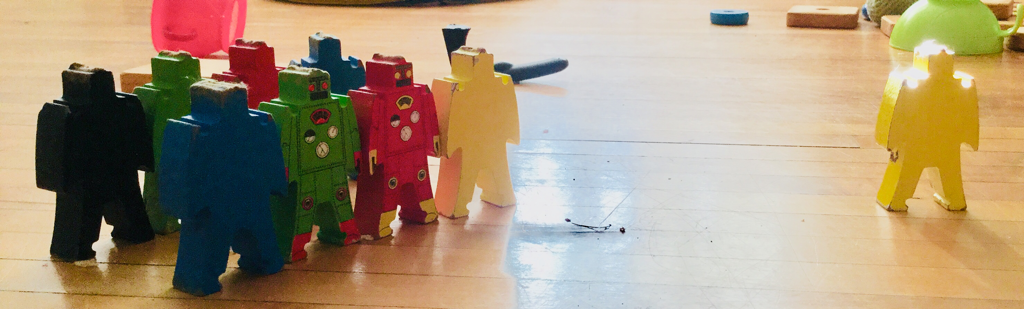
As far as a social skill to be generalized across people and settings, though, I think we need to shift our focus to valuing parallel play, and that awesome implicit, lateral learning over joint attention with autistic learners. Not only do we need to accept it, we need to understand that it actually allows autistic children to optimize their learning, including learning about communication.

Finally, I need to say that there are no prerequisitcs to learning to communicate. Anyone who says joint attention is required for development of commication needs to update their research. But that’s another post for another day.

1 Comment
Orjinal Steroid link
10/13/2025 07:14:08 pm

Hemen Göz At: Steroid Satın Al Anabolik Steroid Sipariş fiyatları orjinal steroid satışı Anabolic Pharma

Reply


Leave a Reply.

    I’m an autistic mom with a neurodivergent partner. Together we parent two autistic kids and herd five cats.

    RSS Feed

Powered by Create your own unique website with customizable templates.
  • Blog
  • About
  • Contact