NeuroMess
  • Blog
  • About
  • Contact

Maximize

6/17/2018

2 Comments

 
Picture
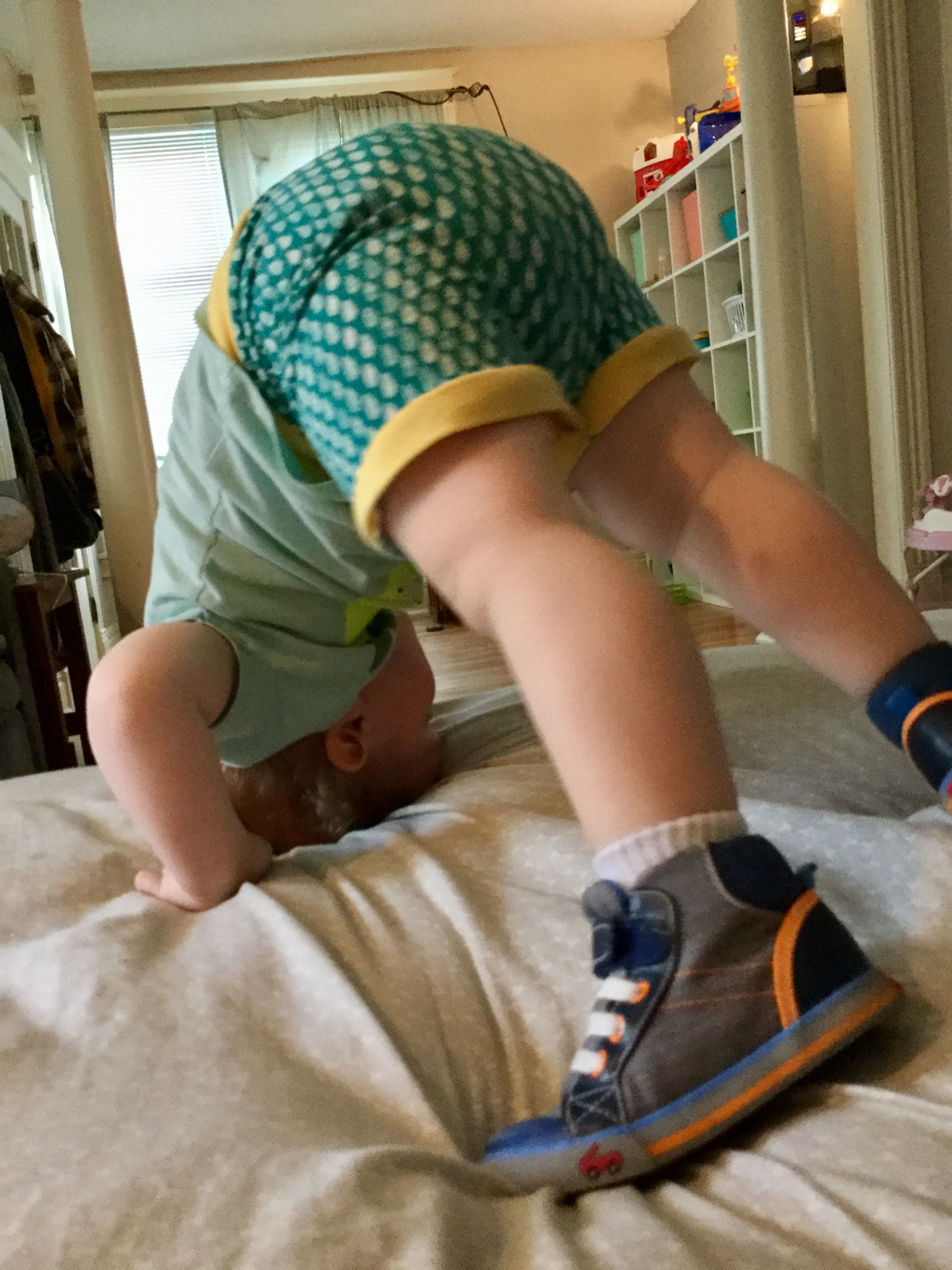
Tonight, Mischa was throwing the big green playground ball up, delighting Foxy.

For over a year now, Foxy has been enamored with gravity. He will bring you things to throw. Not just balls. Water bottles. Shoes. His big plastic toy barn. He will place the item in your hands, often arranging your grasp to his specifications, and then nudge your hands up, indicating he expects you to throw the item. Once you throw it up, catch it, and repeat (ad infinitum if he had his way), he jumps and flaps and displays lots of pleasure and excitement.

Mischa posted a video of this on his facebook once, and a commenter responded with, “I hope that sometime in my life I feel about something the ways your kid feels about physics”.

So, this was playing out tonight with the big green playground ball. Mischa stopped throwing at one point, and Foxy, for the first time, spontaniously signed “up”. I got excited. “Mischa! Mischa! Did you see that? He signed up!”

Mischa began throwing the ball again (one of our operating procedures is “respond to all communication”), now exuberantly saying “up!” each time he threw the ball. Foxy loved this, and after a few rounds he said an aproximation of “up” using oral speech. That was also a first, and Mischa and I were delighted.

And then it happened. As I sat nearby watching this amazing, connected moment unfold, I thought, “Is there a way I can expand the theraputic value of this interaction?”

So, this is a thing. When you have a disabled kid who needs extra or atypical developmental supports, you can get into this mindset that every moment has theraputic potential, and the goal is to maximize as many of them as possible.

At this point, we don’t outsource very much developmental support. Foxy gets 30 minutes of private speech per week (we just cut down from 60 minutes), and a couple weekly early intervention home visits. We had a private OT evaluation recently, with 120 minutes of private OT recommended in the report, but we decided to opt out for now. Foxy has a sensory gym at home, and we use the equipment with him daily. Mischa and I guide his development ourselves, for the most part, which means I spend a lot of time researching. Doing all that research can really reinforce the “mazimize every moment” frame. There is so much that can be done to support our kids’ development, after all! Why wouldn’t we pounce on every opportunity to provide meaningful support that could give them better, brighter futures with more options?

Because—and I am just going to say this definitively—that’s no way to live. No way for me to live. No way for Foxy to live.

Foxy is precious, beautiful, and—like all humans—has inherant value because he is here, alive. It is a mean trap to fall into, the idea that I need to go above and beyond general good parenting to fix or build or reveal something in him so he can have a bright future. His future is bright because he has loving, supportive people in his life who will advocate for his access to it, and teach him to be a self-advocate. The threats to his future’s brightness are the ableist structures and systems and people who will try to limit his access to it. Not the fact that I could have modeled more multimodal communication while Mischa threw the ball tonight, but chose to just enjoy the moment instead.

If our relationships with our kids becaume centered around fixing them, our children will start to look like problems to us by default. Fixing is for problems, after all. They do need us to recognize, though, where they need supports, and we are entrusted with providing those supports and teaching our kids to access them. This parenting work can creep into the realm of “fixing” sometimes without us immedietely seeing it. It can also begin to dominate our relationships with our kids. In my experience this has felt really good, until sudeenly it doesn’t. The pressure to preform builds up until even thinking about playing with my child feels stressful. I’m still designing my checks and balances with this element of my life.

When parents have a toddler with a new autism diagnosis and ask for my opinion on what they should do for their child now that they have this information, I almost always tell them to spend a few months just focusing on their relationship with their child before deciding about any therapies or interventions. Really connect. Make sure that bond is solid, that there is trust and security for the child. Whatever a child’s development holds, the best way to maximize it is to give them the certainty that they are loved an accepted unconditionally by their parents and caregivers.

So, I will take my own advice. I will maximize connection. I will maximize space for authentic interactions that respect my child’s neurology. I will maximize the messages of acceptance and love I give my child. I will maximize the delight I experience just watching him move through the world, without expectations. I will maximize opportunities to respond to his emotional needs with my full attention, and with compassion and curiousity.

And when he is laughing and jumping and flapping as my partner thows the big green playgound ball for him, saying and signing “up”, I will not wonder if I should grab the talker and model UP, or whether I should be modeling the sign so he’ll maybe do it again, or if I should instruct Mischa to add an expectant pause before he says “up” as a way of prompting Foxy to say his aproximation again. I will maximize how good it feels to be with my family in this moment where Foxy was so happy that he just had to find a way to tell us about it.


2 Comments
Socorro
6/18/2018 01:39:09 pm

I think I had this tendency a lot with my son. I allowed myself to be frightened by so much that I looked at everything as a problem to be solved, rather than just allowing him and myself to "just be." You advice to parents with a new diagnosis is spot on!

Reply
Sarah
2/6/2020 07:46:22 pm

Just wanted to say I love this so much and it captures my early struggles with parenting my disabled child so well. Thank you. I have shared a few of your posts within my network and will definitely follow your writings.

Reply


Leave a Reply.

    I’m an autistic mom with a neurodivergent partner. Together we parent two autistic kids and herd five cats.

    RSS Feed

Powered by Create your own unique website with customizable templates.
  • Blog
  • About
  • Contact